

Science
Our Vision for Science at Allenbourn Middle School
At Allenbourn Middle School, we believe that Science provides the foundations for understanding the world around us. Our curriculum develops pupils’ curiosity about natural phenomena while helping them understand how science can explain what is happening, predict how things will behave and investigate why things happen.
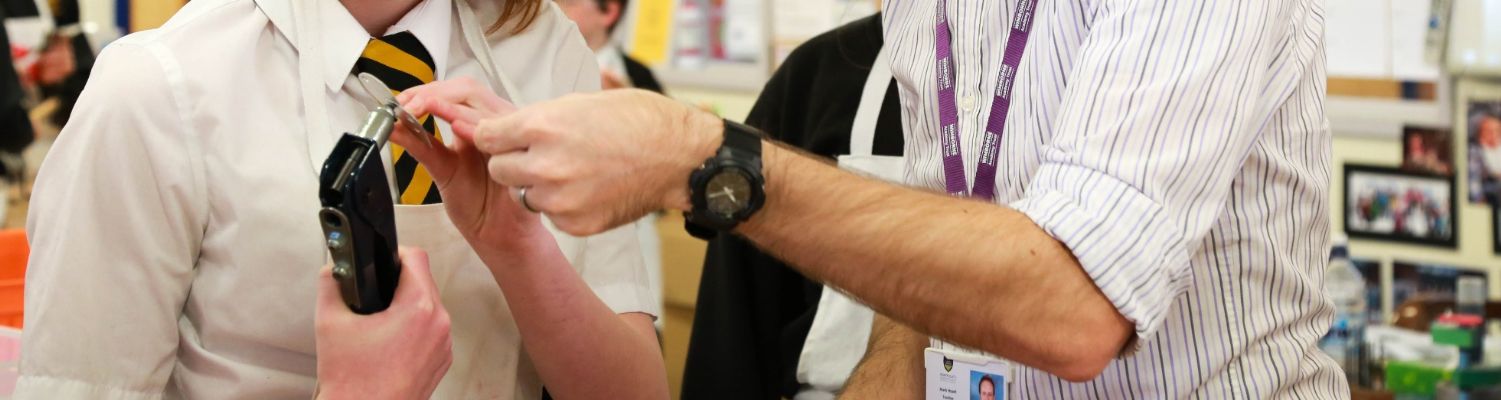
Through a carefully sequenced curriculum, pupils develop their knowledge and understanding alongside the skills needed to work scientifically. Practical investigation is an important part of learning, with pupils developing skills such as using microscopes, handling chemicals and equipment safely, and making measurements of time, distance and forces in different contexts.
We strive to develop inquisitive, analytical and resilient problem-solvers who are able to ask questions, investigate ideas and use evidence to reach conclusions. By encouraging pupils to wonder about the world around them, we aim to inspire the curiosity and critical thinking needed to understand and contribute to solving the challenges of the future.
How Science Links to Other Subjects
Science is closely connected to many areas of the curriculum. Mathematics supports pupils in working with data, measurements and numbers to analyse results and provide evidence for scientific ideas, while English develops pupils’ ability to use precise vocabulary and communicate complex scientific concepts clearly.
Geography helps pupils understand the physical forces and processes that shape our world, while practical Science builds on skills developed in Design and Technology. There are also links with Computing through enquiry, sequencing and the use of logical processes to investigate and solve problems.
How You Can Support Science at Home
Encourage your child to develop an enquiring mind by asking questions about the world around them. You do not need to know the answers — exploring questions together and finding out why things happen is a valuable part of developing scientific curiosity.
Watch nature and science documentaries together, look at the stars and planets, or discuss everyday phenomena. Ask questions such as: Why does heat rise? Why do cats sometimes appear to stare at nothing? Why might you experience more static shocks on a less humid day?
Encourage your child to think scientifically when solving everyday problems by considering the variables involved and changing one thing at a time. This helps develop the habits of investigation and reasoning that are central to Science.
Useful Resources:
BBC Bitesize provides resources for both Key Stage 2 and Key Stage 3 Science.
You can also explore science content together through BBC Earth Science and Steve Spangler Science on YouTube, or through the How Stuff Works magazine.